Home › Guides › Wasp nest removal: what you need to know
Wasp nest removal: what you need to know
Updated October 2026
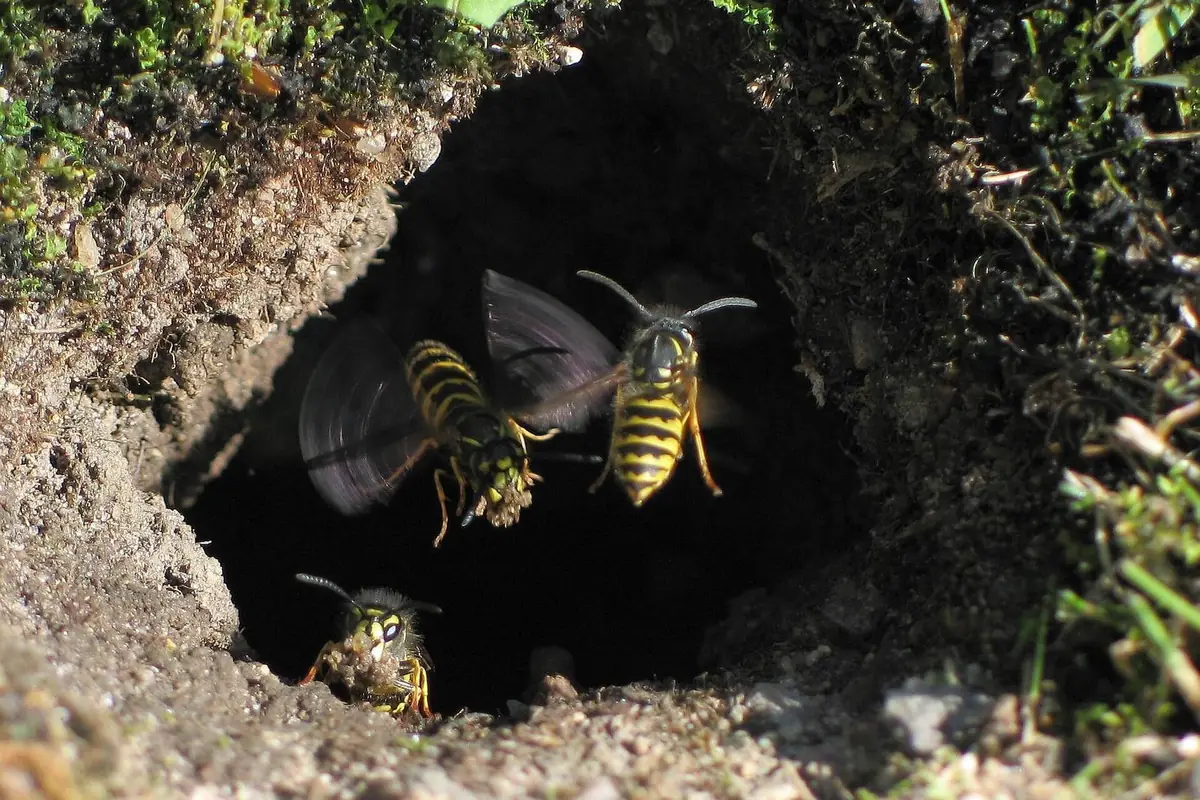
Wasp nests grow quickly through the summer. A nest that starts with one queen in spring can hold several thousand wasps by August. Wasps are most aggressive in late summer, when the nest is at its biggest.
How to find the nest
Watch for a steady line of wasps flying in and out of the same spot: under roof tiles or fascias, in air bricks, wall cavities, sheds, bushes or holes in the ground. Don't block the entrance. Trapped wasps may chew their way into the house.
Is it safe to leave it?
A nest far from doors and paths can sometimes be left. Nests are not reused, and the wasps die off in autumn. If the nest is near a door, window, play area or bins, or anyone in the home is allergic to stings, have it treated.
What treatment involves
A pest controller puts insecticide dust into the nest entrance, usually with a long lance, while wearing protective clothing. Activity normally stops within a day. The nest itself often doesn't need removing.
Are they bees?
Bees are less aggressive and important pollinators. A good pest controller will not treat honey bees. If you are unsure, send a description or photo and they will tell you. Beekeepers can sometimes collect swarms.
Need help?
Use the form to send a free enquiry. We'll pass it to an independent local pest control provider.